Community Stewardship
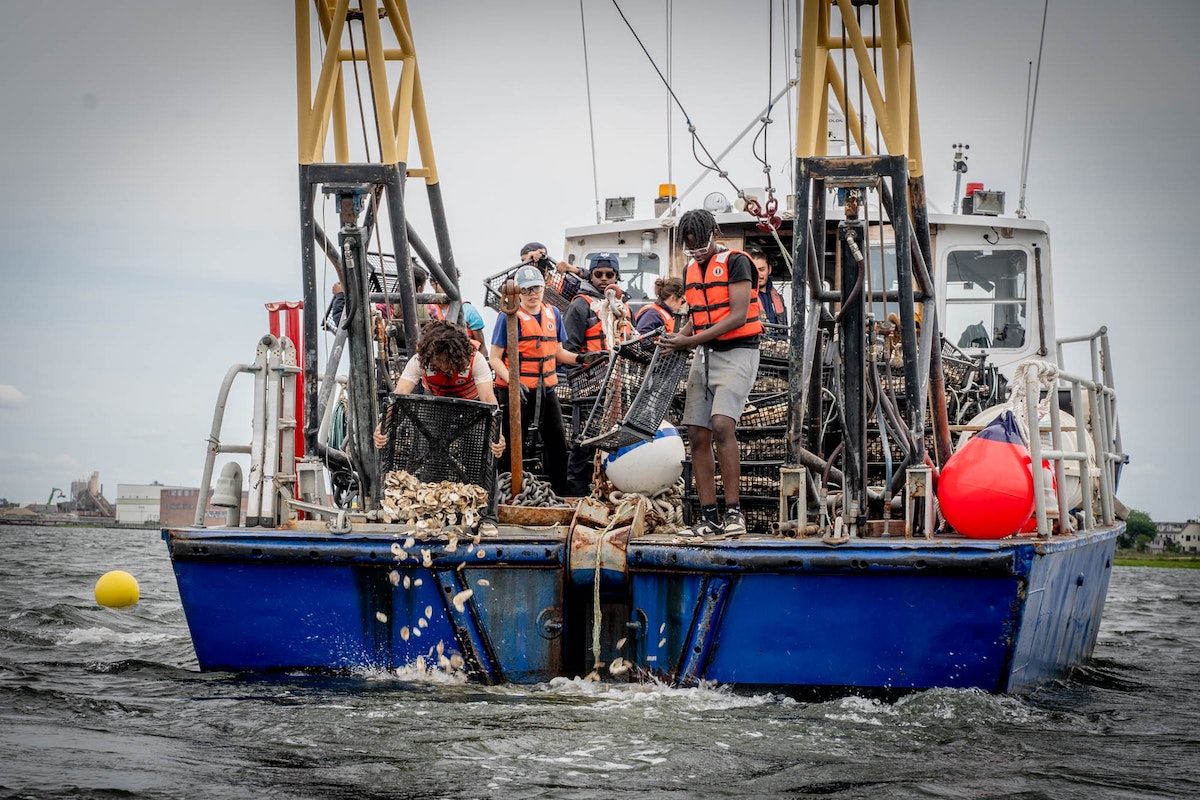
Photo Credit: Billion Osyter Project
Our Community Stewardship Program provides general operating support to high-impact local stewards primarily, though not exclusively, in communities where Rivian has a presence. The grantees we support safeguard and restore healthy ecosystems in their communities while also working to ensure that everyone has an opportunity to connect with nature. Recognizing that each community’s needs differ, we fund and support groups working in both urban and rural contexts.
Priorities
Urban conservation
In urban settings, we fund groups focused on creating, safeguarding, and restoring vibrant urban ecosystems that increase connection to nature. Key urban conservation issues supported by the Rivian Foundation include:
Creating and maintaining urban green spaces.
Planting native trees to mitigate urban heat islands.
Bringing degraded urban land and waterways back to life.
Integrating nature directly into city life.
Wild and working lands
In rural settings, we invest in groups focused on safeguarding and restoring healthy, unfragmented ecosystems that benefit both nature and people. Key conservation rural issues supported by the Rivian Foundation include:
Securing permanent, durable protections for critical ecosystems, wildlands, and coastal waters.
Supporting sustainable and regenerative management of working lands.
Advancing local landscape restoration.
Featured grantees
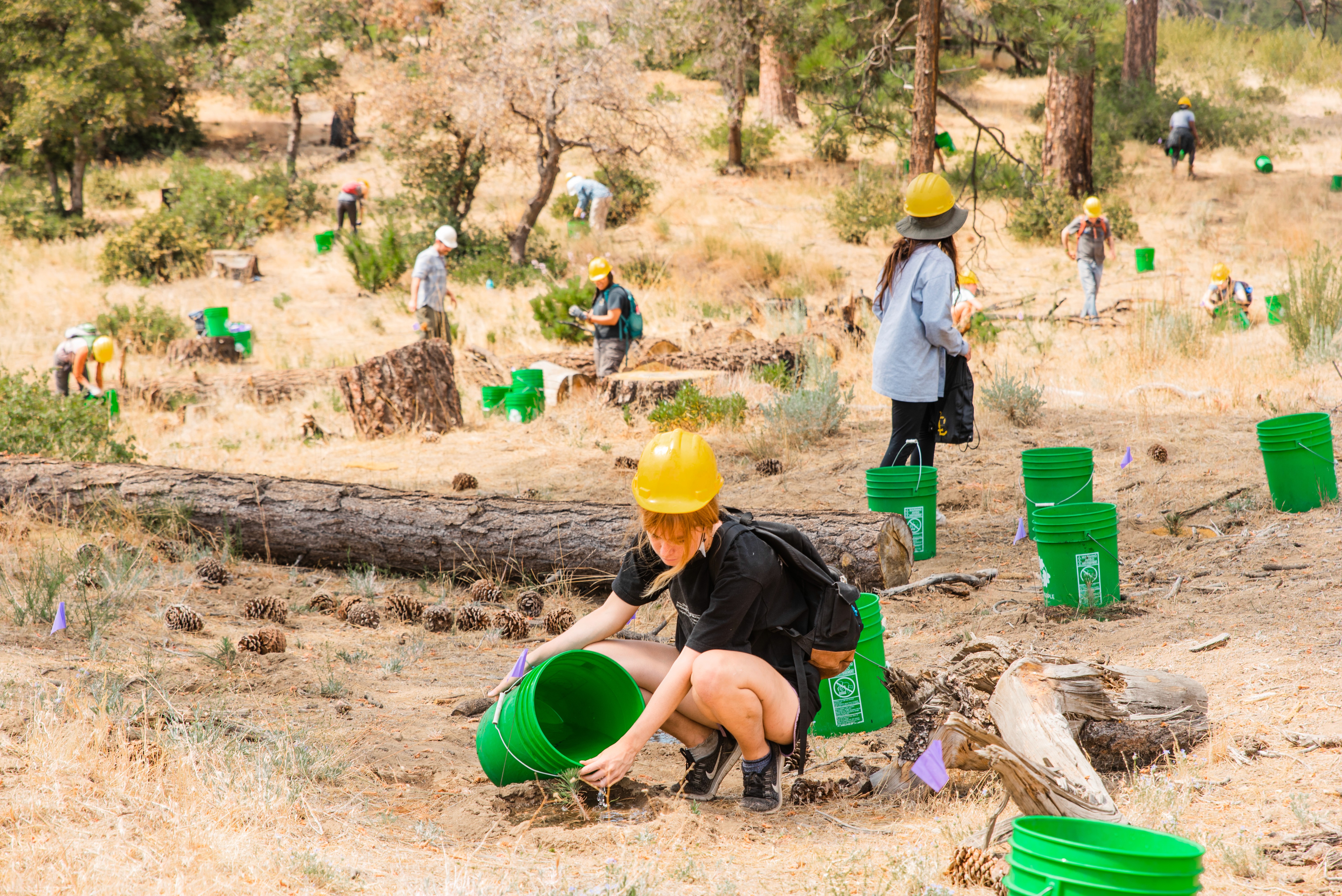
TreePeople
Urban Conservation
Los Angeles, California
TreePeople is a leading force in environmental conservation across Southern California, combining community-driven climate solutions with education, restoration, and advocacy. With a 50-year legacy and deep roots in communities impacted by extreme heat, pollution, and wildfires, TreePeople engages tens of thousands of residents each year through tree planting, green schoolyards, wildfire restoration, and hands-on environmental education. Its teams work across both urban and wildland landscapes to expand tree canopy, restore ecosystems, build youth leadership, and advance systemic changes to promote ecological resilience and healthier communities.
Photo Credit: TreePeople

Prairie Rivers Network
Wild and Working Lands
Champaign, Illinois
Prairie Rivers Network (PRN) is a leading organization in Illinois dedicated to addressing the interconnected climate, water, and biodiversity crises. PRN works statewide, focusing on climate and energy, habitat and biodiversity, and clean water and river health. Notable achievements include securing a settlement for coal ash removal from the Middle Fork of the Vermilion River and producing the "Quad Cities Climate Vulnerability Assessment" to guide communities in climate resilience.
Photo Credit: Prairie Rivers Network

Georgia Conservancy
Wild and Working Lands
Atlanta, Georgia
Georgia Conservancy is Georgia's voice for conservation, advancing the protection of the land, water, and wildlife that are fundamental to the state's health and identity. The organization's mission is simple: healthy lands, thriving communities, and a future where every Georgian can enjoy the outdoors for generations to come. Founded in 1967, Georgia Conservancy advances this mission by helping people explore the outdoors, teaching why it matters, and working with communities to protect what makes Georgia special. Known for its education, community engagement and advocacy, the organization has secured protections for over 16 of Georgia’s precious places and restored thousands of acres of land through prescribed fires and other conservation practices.
Photo Credit: Phuc Dao

Friends of the High Line
Urban Conservation
New York, New York
Friends of the High Line is the nonprofit conservancy that created, maintains, and fundraises for the High Line—a 1.5-mile elevated park built on a historic freight rail line on Manhattan’s West Side. What began as a grassroots effort by two Chelsea residents to save an abandoned structure has become one of the world’s most iconic examples of infrastructure reuse, inspiring many similar projects globally. The High Line’s native and climate-resilient gardens are home to more than 500 species of plants and trees, support 33 bee species and a variety of native birds, and provide a vibrant respite in a community historically lacking public green space. Friends of the High Line also helps shape the future of public space through the High Line Network, a learning community for infrastructure reuse projects across North America.
Photo Credit: Timothy Schenck

Photo by: Friends of the Owyhee